

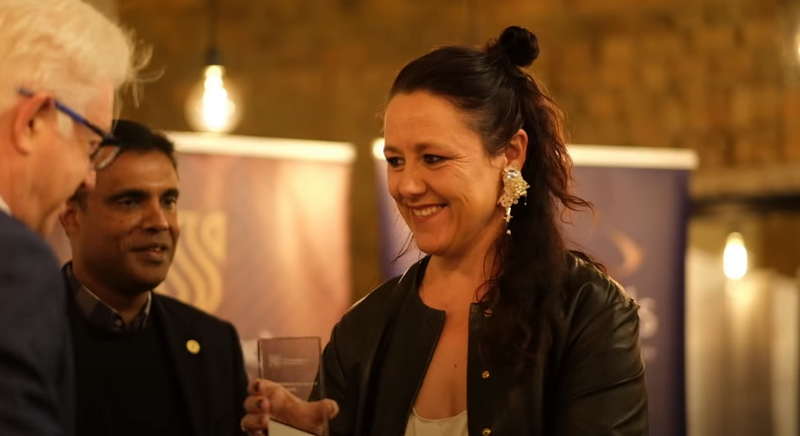

At the 2026 CEO Awards, Stellenbosch University celebrated a spinout portfolio generating over R630 million in combined turnover, delivering proven, market-ready ag-tech solutions designed to protect yields, optimize water quality, and build farm resilience. As agricultural producers across South Africa navigate unpredictable weather, escalating input costs, and increasingly strict food safety standards, university research is stepping out of the laboratory and directly into the field. Crucially for the agricultural sector, the university’s commercialization pipeline is providing practical, field-tested tools to meet these modern challenges head-on.
TerraClim: Precision Climate Intelligence for Better Yields
Taking top honors with the Growth Champion Award, SU spinout TerraClim has established itself as an essential decision-making tool for South African growers. The company’s climate-intelligence platform transforms raw data from hundreds of weather stations into detailed, high-resolution microclimate maps.
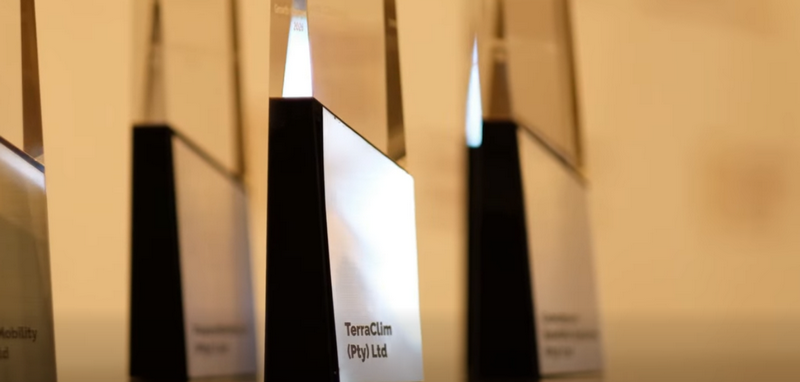
By analyzing local terrain, slope, elevation, and historical temperature variations at field-level accuracy, TerraClim equips farmers with actionable bioclimatic indices. Growers can track frost risk, heat unit accumulation, and winter chill hours to make informed decisions on cultivar selection, irrigation schedules, and long-term land preparation. Rather than relying on broad regional forecasts, farmers can use TerraClim to understand the precise climate dynamics of individual blocks, helping mitigate weather risks and preserve crop quality under changing environmental conditions.
Biotrac Systems: Safeguarding Irrigation and Food Safety
In any modern farming operation, water quality is non-negotiable. Recipient of the Resilience Award, Biotrac Systems has commercialized a deep-tech solution that addresses the persistent challenge of microbial fouling in industrial and agricultural water systems.
Biotrac’s non-invasive, IoT-enabled sensors track microbial metabolic activity and surface adhesion in real time. For producers, this continuous monitoring offers an early warning system against biofouling in drip irrigation lines, hydroponic systems, and packhouse wash water. By identifying microbial spikes before physical blockages or food contamination occur, farmers can precisely target chemical treatments, reduce operational downtime, ensure compliance with export safety standards, and safeguard soil metabolic health.
Space-Grade Tech Supporting Precision Agriculture
While focused on orbital technology, Global Impact Award winner CubeSpace highlights how advanced science indirectly fuels smart farming. The company produces precision satellite control systems supplied directly to international space missions. These stabilization systems keep Earth-observation satellites accurately positioned, directly supporting the high-resolution satellite imagery and remote-sensing data that agronomists use daily to assess crop health, monitor soil moisture, and map canopy coverage from space.
Building an Innovation Ecosystem for Agriculture
SU Rector and Vice-Chancellor Prof Deresh Ramjugernath emphasized during the awards that commercialization is key to addressing real-world challenges across South Africa and the continent. With an 89.2% five-year survival rate across its 44 spinout enterprises, SU’s commercialization arm, Innovus, proves that university-backed technologies are built for commercial viability. For the agricultural community, these award-winning enterprises offer concrete, data-driven tools that turn academic innovation into practical, farm-level resilience.