

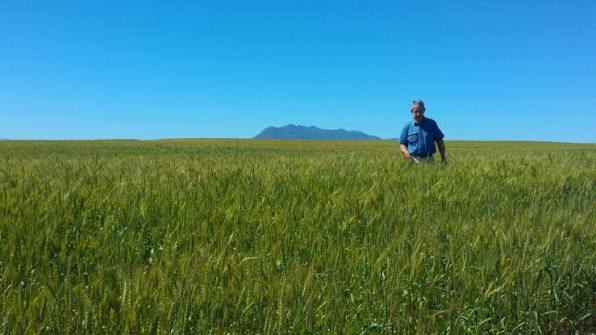

South Africa’s grain sector is sounding the alarm as a severe drought in the Swartland threatens to devastate the national wheat crop. Grain SA has issued an urgent call for government intervention, warning that local producers can no longer absorb escalating climate and financial risks without public-private support.
With some farmers estimating that 25% to 30% of their crop potential is already lost—compounding an existing decline in planted hectarage—the crisis threatens to erode South Africa’s broader food security and agricultural economy.
A Promising Start Turns Severe
The 2026 production season began with immense promise. Regional data from Overberg Agri shows the Swartland received roughly 176 mm of rain during April and May, far exceeding the ten-year average of 66 mm. Encouraged by early moisture, farmers committed significant upfront capital into seed, fertiliser, fuel, and labour.
However, conditions deteriorated drastically. From June to August, rainfall plummeted to approximately 43 mm—nearly 79% below the historical average of 202 mm. Because dryland wheat reliance requires precise rainfall timing, farmers have already incurred heavy input expenses that cannot be recouped.
Shrinking Margins and the Limits of Efficiency
The current dry spell hits an industry already operating on dangerously thin financial buffers. Farm-level figures reveal that between 2016 and 2026, direct input costs for Swartland producers soared by approximately 65%, while farm-gate wheat prices rose by only 36%. These figures do not account for steep increases in machinery replacement, maintenance, interest rates, and labour.
Farmers have aggressively adapted by adopting conservation agriculture, improving soil health, and investing heavily in research. Through the South African Cultivars Technology Agency (SACTA), producers contributed roughly R986 million toward breeding, yielding 231 new varieties, including 66 wheat varieties. Yet, as industry leaders point out, while farmers can manage soil and water better, they cannot force it to rain.
A Call for Affordable Crop Insurance
Grain SA is urging government to treat affordable crop insurance as a critical national priority. While agricultural risk products exist, multi-peril and yield-based cover remain financially out of reach for most dryland producers.
Although modern technology—including satellite monitoring, soil sensors, and localized weather stations—makes sophisticated index-based insurance viable, public-private partnerships are needed to subsidize premiums at scale. Internationally, major agricultural nations routinely share climate risk with producers through subsidized insurance and disaster relief.
R600-Million Soybean Showdown: Grain SA and JSE Head to Court Over Pricing Inefficiencies
“Government cannot continue to regard climate risk as the farmer’s problem alone,” stated Grain SA CEO Dr Tobias Doyer, emphasizing that losing local farmers diminishes employment, rural infrastructure, and national food resilience.
National Implications Beyond the Farm Gate
The timing of the drought is critical: wheat hectarage in South Africa has already fallen to its lowest level in 97 years. If dryland farming remains economically unviable, Swartland producers may permanently shift land toward livestock or other lower-risk operations.
Such a structural shift would carry massive economic repercussions. Research from the Bureau for Food and Agricultural Policy (BFAP) estimates that the national wheat value chain contributes R70 billion to R75 billion to the economy, supports 90 000 jobs, and provides staple foods consumed by 96% of South African households.
Grain SA argues that maintaining domestic wheat capacity requires immediate policy action, including index-based insurance subsidies, responsive tariff structures, and sustained agronomic investment before producers leave the industry permanently.