

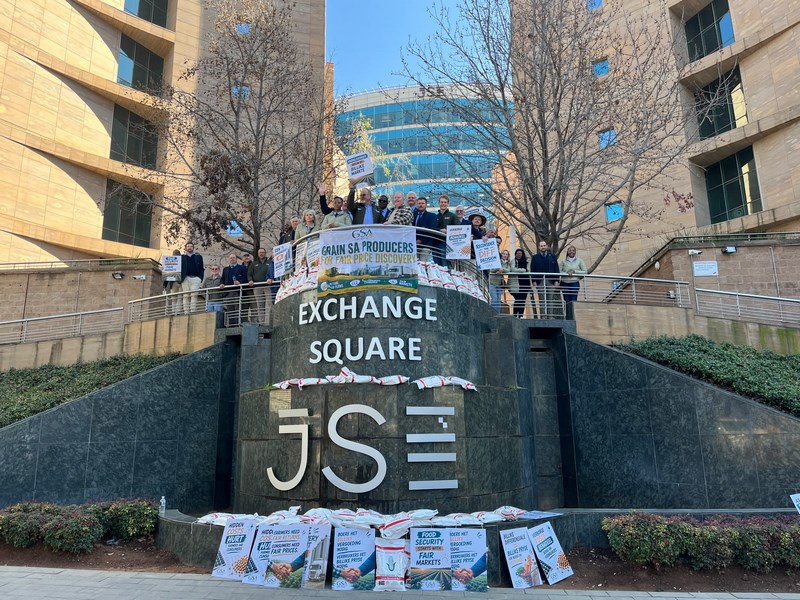

The legal battle between South African grain producers and the Johannesburg Stock Exchange (JSE) has escalated as the exchange decided to oppose Grain SA’s interdict application. The dispute centers on the JSE’s decision to discontinue the soybean Multiple Reference Point (MRP) model and revert to the traditional Single Reference Point (SRP) methodology for calculating location differentials.
What appears to be a technical debate over agricultural futures mechanics carries massive real-world consequences. Grain SA estimates that over R600 million—specifically R696 million across relevant soybean volumes and delivery points—is at stake, raising urgent questions about who ultimately shoulders the burden of unnecessary market costs.
The Economics: Shortest Route vs. Theoretical Transit
Location differentials reflect the theoretical cost of moving grain from storage silos to processing facilities. The core conflict stems from two vastly different calculation approaches:
- Multiple Reference Point (MRP): Accounts for actual physical market conditions. It matches available soybean stock with processing demand along the most direct economic route. Under this model, average transport deductions stand at approximately R113 per ton.
- Single Reference Point (SRP): Calculates transport deductions relative to a single central benchmark location, even if the grain travels in an entirely different direction to reach an actual buyer. Under this system, average transport deductions surge to around R333 per ton.
This creates a difference of roughly R220 per ton. When multiplied across national soybean volumes, the model builds a theoretical R696 million transport expense into the system that does not reflect physical grain movements.
Squeezed Margins and the Food Value Chain
In grain marketing, higher location differentials in futures contracts translate directly into lower cash prices paid to producers at the silo gate.
Dr. Tobias Doyer, CEO of Grain SA, emphasizes that farmers cannot absorb these additional deductions on top of already tight operating margins. He argues that if a more efficient route to market exists, forcing the market to price in artificial transit costs penalizes producers and burdens the entire food chain.
Echoing these concerns, Grain SA’s Dirk Strydom notes that pricing grain as though it must travel toward a single reference point creates phantom transport costs and provides market power that risks distorting physical trade premiums.
When extra transport charges are built into the pricing model, the impact ripple across the sector:
- For Producers: Higher deductions directly reduce net income at the silo gate, threatening financial sustainability.
- For the Value Chain: Unnecessary transport costs create friction and artificial inefficiencies in the derivatives market.
- For Consumers: Additional systemic costs risk being passed further through the chain to processors, manufacturers, and buyers.
Demands for Transparency and Evidence
Grain SA maintains that the JSE’s decision to abandon the MRP model—after a two-year trial period—lacked sufficient quantitative justification and failed to address the evaluation criteria previously agreed upon by industry stakeholders.
As the court interdict proceeds, Grain SA is calling for an evidence-based pricing mechanism built on five core principles:
- Physical Accuracy: Reflect how grain actually moves in the cash market.
- Economic Efficiency: Use the shortest, most direct routes between supply points and processing facilities.
- Cost Reduction: Eliminate phantom transport charges from the price discovery mechanism.
- Market Integrity: Protect accurate price discovery without information asymmetry.
- Chain Sustainability: Support an efficient food market that serves both sustainable producers and end consumers.
Grain SA has reaffirmed its commitment to pursuing all formal legal and regulatory processes to ensure a transparent, fair, and efficient agricultural derivatives market.