

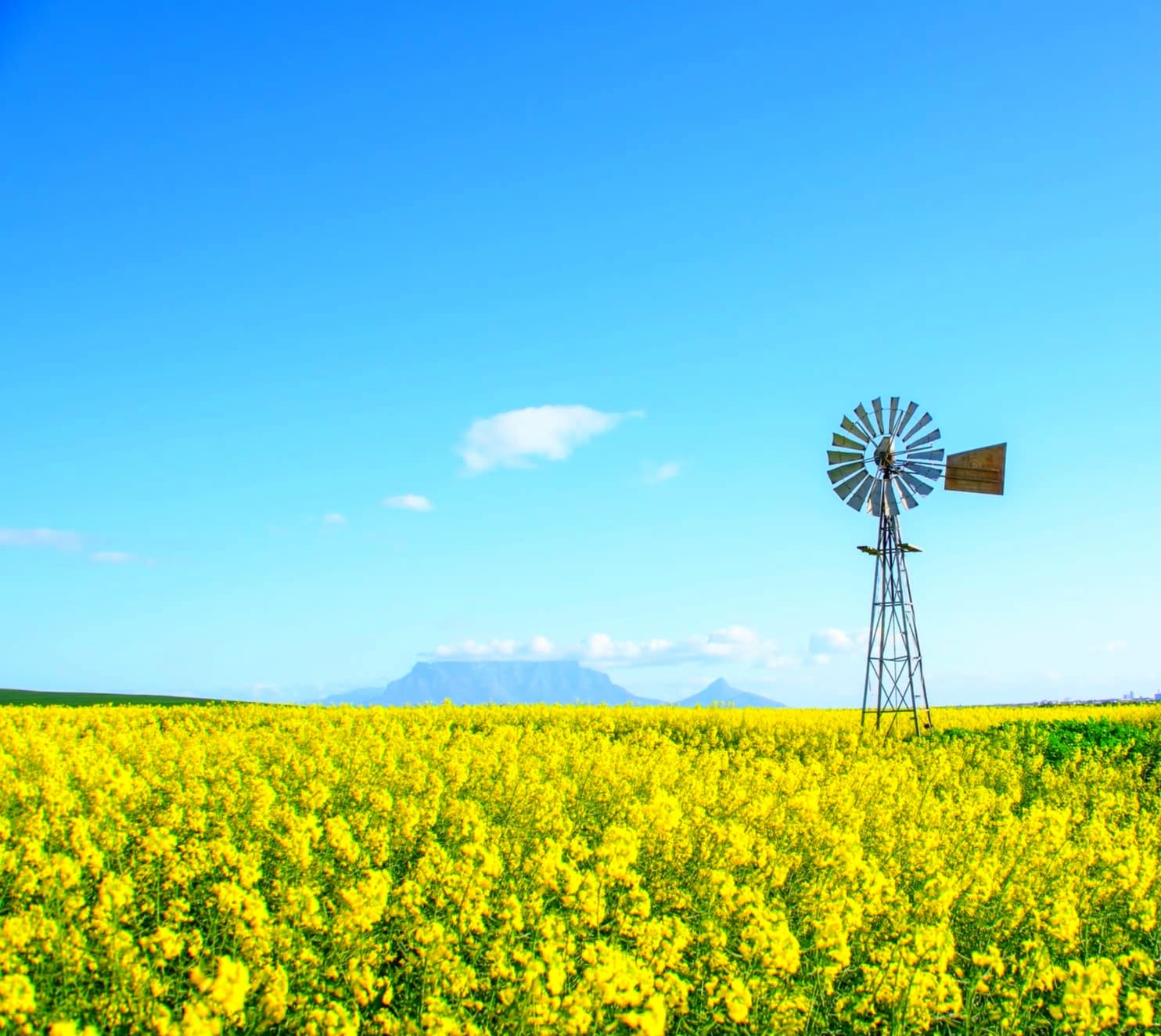

As late winter rolls across the Western Cape, driving through the agricultural corridor between Malmesbury and Hopefield offers a magnificent sight: brilliant-yellow seas of flowering canola set against classic farm windmills and blue mountain silhouettes. Yet beyond its postcard appeal, canola represents one of the most remarkable growth stories in South African broadacre farming.
A Concentrated Production Hub
While canola has become synonymous with the Cape’s winter landscape, its geographic footprint across South Africa is highly concentrated. Over 95% of the national crop is grown in the Western Cape, thriving in the province’s wet Mediterranean winters. Production anchors across two main agricultural hubs:
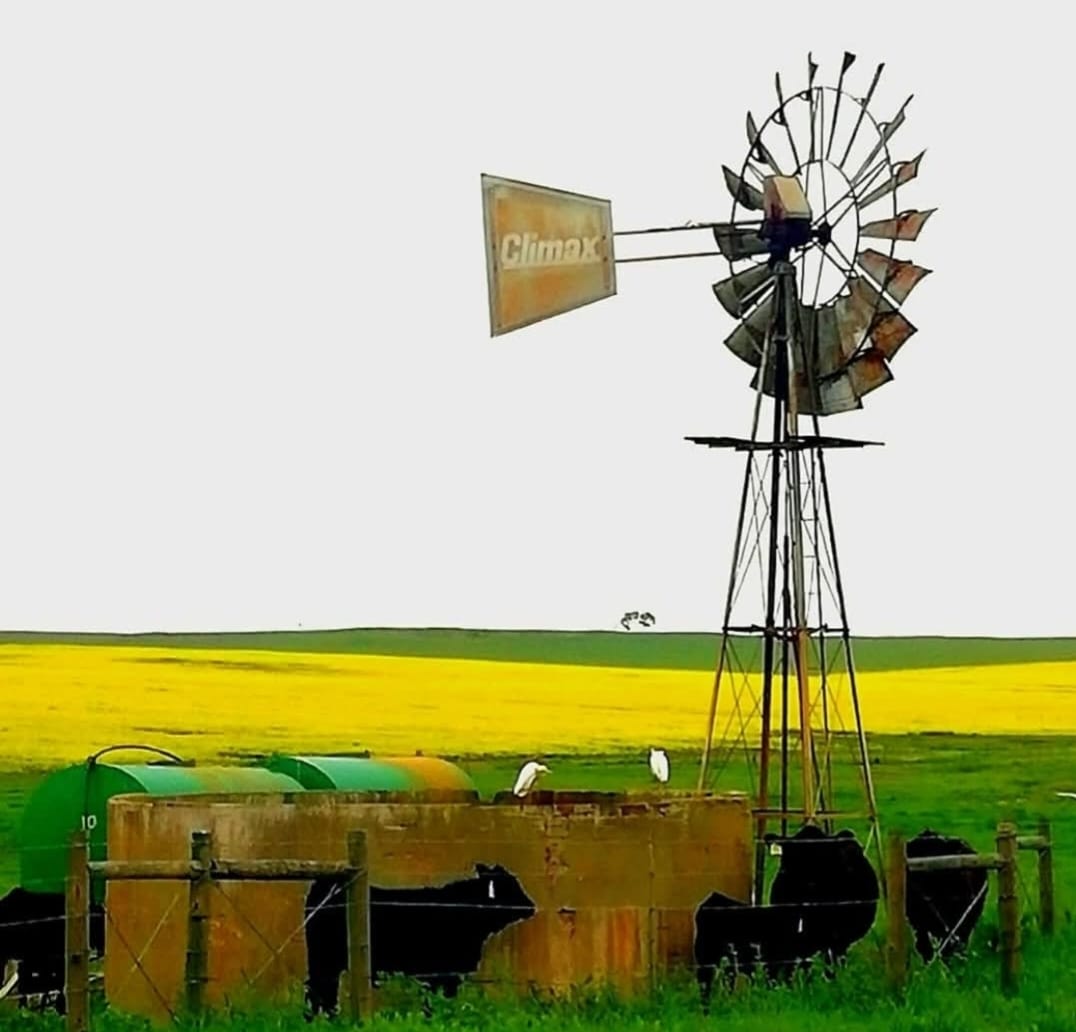
- The Swartland: Spanning the Malmesbury, Hopefield, Moorreesburg, and Piketberg grain belts.
- The Overberg: Stretching across Caledon, Bredasdorp, Swellendam, and Riversdale.
Outside the Cape, commercial production remains minimal. Limited rainfed plantings exist in Eastern Cape border areas like the Langkloof valley, while small-scale trials under centre-pivot irrigation operate in summer-rainfall provinces such as the Free State, North West, and Northern Cape. However, electricity and water pumping costs under pivot systems make irrigated canola far less cost-competitive than the Western Cape’s rainfed dryland system.
Strong Crop Estimates and Export Growth
Recent statistical figures from the Crop Estimates Committee (CEC) highlight this momentum, with national canola plantings standing around 165,000 to 180,000 hectares and seasonal production forecast at a robust 311,000+ tonnes.
According to Wandile Sihlobo, Chief Economist at the Agricultural Business Chamber of South Africa (Agbiz), canola’s rise reflects a long-term structural shift. Sihlobo highlights that South Africa has transitioned into a net exporter of canola, shipping high-quality seed to discerning European markets such as Germany and Belgium, while giving local grain producers a profitable cash crop alternative to traditional wheat and barley.
Local Value-Addition via Southern Oil
At the center of the provincial supply chain is Southern Oil (SOILL), operating its primary crushing and extraction facility in Swellendam. Raw canola seeds yield between 42% and 44% high-purity oil, processed into popular culinary products like B-Well canola oil. The remaining high-protein oilcake meal provides a vital feed component for Western Cape dairy and poultry farmers, securing a self-sustaining regional value chain.
Field operations will soon transition into the harvest phase. Swathing (referred to locally in Afrikaans as platstoot) usually starts in mid-to-late September as fields drop their bright yellow petals. Harvesters roll the windrows to prevent wind damage, followed by combine harvesting equipped with pickup headers throughout October and November.
Waarom produsente stresbestuur in ’n tyd van weeruiterstes moet herdink
Key Agronomic Benefits
For dryland grain producers, canola is far more than an attractive cash crop—it serves as an indispensable tool within winter cereal rotations:
- Breaking Disease & Weed Cycles: Belonging to the Brassicaceae (mustard) family, canola is immune to cereal pathogens, effectively resetting soil health by breaking fungal cycles like take-all and crown rot. It also allows farmers to apply alternative broadleaf herbicides to clear herbicide-resistant ryegrass.
- Soil Structure & Moisture Penetration: Canola’s aggressive taproot pierces through heavy clay soils, naturally aerating the profile and creating deep channels that improve rainwater infiltration for future wheat crops.
- Financial Diversification: Incorporating canola into multi-year crop rotations spreads market risk, allowing farmers to hedge farm-gate revenue against volatile international wheat prices and fluctuating input costs.
A Golden Future for Cape Grain
As swathing equipment prepares to roll into the fields between Malmesbury and Hopefield in the coming weeks, the Western Cape’s canola fields stand as a masterclass in modern agricultural strategy. By marrying environmental synergy with solid economic returns, Cape grain producers have built a resilient, sustainable cropping model. The glowing yellow carpets stretching across the Swartland, deep into the Overberg, and reaching toward the edges of the Garden Route are far more than a stunning winter spectacle—they are the visible signature of an agricultural sector thriving on innovation, smart rotations, and strong market demand.