


In an unprecedented turn of events, South African agricultural and economic sectors are navigating a rare regulatory reality. Just days after the National Disaster Management Centre (NDMC) issued a nationwide disaster classification on 10 May, the Head of the NDMC, Dr Elias Sithole, officially signed a second, additional national disaster classification notice on 18 May 2026.
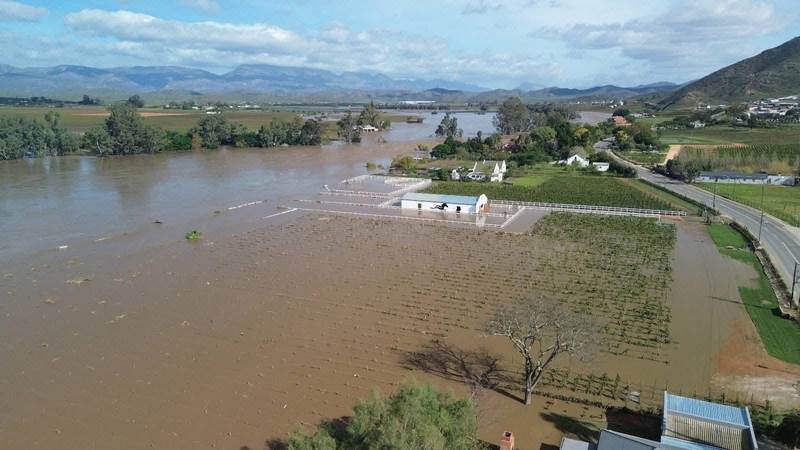
While a primary classification was activated following early-May storms, this latest legal intervention was triggered by a subsequent, highly destructive weather system that slammed the country between 10 and 14 May. The Western Cape, Free State, Eastern Cape, and Northern Cape have all been heavily impacted by this consecutive wave of severe weather.
For the Western Cape’s multi-billion-rand agricultural economy, which accounts for 58% of South Africa’s primary agricultural export value, this legislative development marks a critical shift from local crisis management to an accelerated national intervention.
What Does the Classification Mean for Producers?
There is an important regulatory distinction between a disaster “classification” and a “declaration.” Under Section 23 of the Disaster Management Act, this classification legally confirms that the magnitude and severity of the infrastructural and environmental damage across multiple provinces exceed local municipal and provincial capacities.
Crucially, the Department of Cooperative Governance and Traditional Affairs (CoGTA) has confirmed that this new classification does not replace the 10 May notice; both remain fully active and operational. In real terms, this mandates all national organs of state to implement “multisectoral prevention and mitigation plans” and systematically direct capital toward emergency infrastructure rehabilitation. It cuts through bureaucratic red tape, positioning the National Executive to lead, coordinate, and stream emergency funds directly into repairing broken agricultural logistical corridors, irrigation infrastructure, and rural utility networks.
Organizations Respond to the Crisis
The national classification has triggered a unified, multi-tiered response from independent producer organizations, state departments, and humanitarian bodies across the province:
- Agri Western Cape: As an independent, voluntary producer organization representing the interests of commercial farmers in the region, Agri Western Cape has strongly welcomed the national announcement. Stepping in to advocate for heavily affected farming nodes, the organization emphasized the absolute necessity of state-backed financial aid for rapid infrastructure recovery. Jannie Strydom of Agri Western Cape noted, “The classification of a disaster is essential in order to gain access to additional support and funding, enabling the repair work that is urgently needed.” The organization has committed to ongoing cooperation with Eskom and provincial departments to ensure the practical, on-the-ground needs of farmers are prioritized.
- Western Cape Provincial Government: Following an emergency cabinet meeting, Premier Alan Winde and provincial Minister of Agriculture Dr Ivan Meyer met with national CoGTA Minister Velenkosini Hlabisa to visit affected areas and fast-track resource allocation. The provincial Department of Agriculture has actively deployed contractors to clear transport pathways and has utilized automated disaster logging applications to ensure that crop, livestock, and soil erosion damage is logged directly via barcodes by isolated producers.
- Eskom and Municipal Infrastructure Teams: Technical crews have worked under extreme constraints, successfully restoring power to a majority of affected rural grids, despite waterlogged fields slowing down physical access to fallen power poles and repairing over 9,000 reported faults.
- Humanitarian Networks: Entities like the Gift of the Givers and the National Sea Rescue Institute (NSRI) have spearheaded emergency community relief, evacuating trapped farmworkers in flooded areas such as the Breede Valley and supplying immediate humanitarian aid to affected rural settlements.
The Road Forward
While the torrential rainfall has generated a long-term silver lining by lifting average provincial dam levels from 52.5% to 70.6% ahead of the upcoming production season, the immediate recovery demands realistic expectations. Tens of thousands of agricultural faults, destroyed pump stations, and inundated orchards require extensive capital.
Thanks to the dual disaster classifications now active in the government gazette, the legal mechanisms are firmly in place. The immediate priority now shifts from damage logging to the rapid deployment of national funding to futureproof and rebuild the Western Cape’s vital agricultural networks.