


With fertilizer costs hitting 50% of budgets and a looming R4.40/L diesel hike, the 2026 Grain SA Congress highlights a widening gap that threatens national food security. While Part 1 of our report (published 18 March) focused on this “perfect storm” of rising inputs and infrastructure decay, the final sessions at NAMPO Park shifted toward a defiant strategy for survival.
If the problem is a lack of predictability, the solution—according to Grain SA—is a blend of automated policy and uncompromising precision.
- Automated Protection for Wheat
To address the structural failure in the wheat value chain—where South Africa remains 40% to 50% dependent on imports—Minister John Steenhuisen announced a move toward automated, trigger-based wheat tariffs. This removes the “administrative tax” caused by slow gazetting, ensuring local producers are protected the moment global prices drop. Grain SA also reiterated the need for institutional mechanisms to fix market distortions that currently leave producers absorbing all the downside risk.
- Data-Driven Survival: The DIFM Project
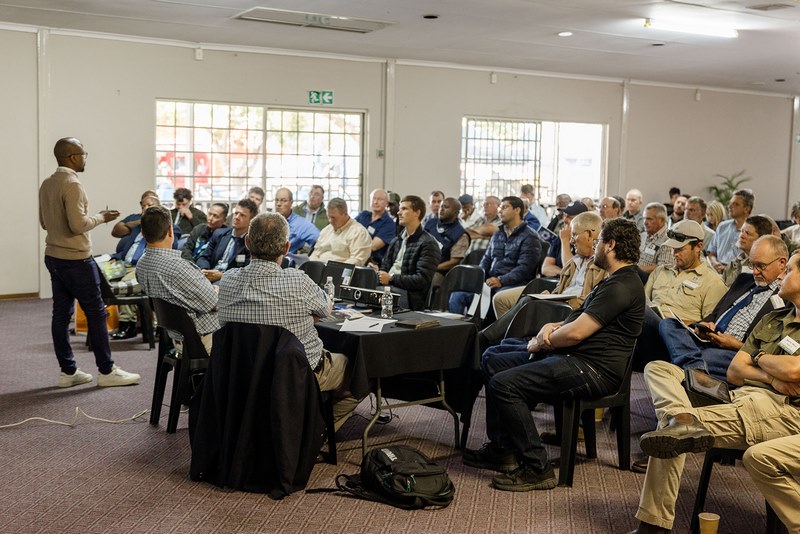
The answer to the fertilizer “squeeze” (35%–50% of budgets) is the Data-Intensive Farm Management (DIFM) project. Using checkerboard trials, farmers are now identifying the Economic Optimum of their fields. Instead of farming for maximum yield, they are farming for maximum margin—using precision data to ensure every kilogram of fertilizer provides a financial return.
- Infrastructure: The Free State Corridor Pilot
To combat the “logistics tax” and the decline of rail (now only 3% of grain moved), Grain SA welcomed the launch of a Free State pilot project for dedicated agricultural logistics corridors. By using freight-flow data to prioritize rural road repairs, the state and organized agriculture aim to fix the “last mile” that connects the farm gate to the market. This stems from a new Memorandum of Cooperation between Agri SA, Agbiz, and Infrastructure South Africa (ISA).
- Innovation: Faster Pathways for NBTs
To stay globally competitive, Congress called for faster regulatory pathways for New Breeding Technologies (NBTs) and gene editing. By updating the GMO Act with a tiered risk-assessment system, South Africa can accelerate access to climate-resilient genetics, ensuring that “delayed access to technology” is no longer a risk to our competitiveness.
- Defending Water and Biosecurity
Beyond grain-specific issues, the Congress addressed broader agricultural threats:
Water Rights: Minister Steenhuisen committed to dismantling the “devastating” impact of proposed new water legislation that threatens 60% of the sector’s usage.
Biosecurity: A call for a unified industry-government front to strengthen biosecurity standards following the recent FMD (Foot-and-Mouth Disease) escalations.
The 2026 Congress made one thing clear: the “gap” will not close itself. By combining automated tariffs, field-level data, and targeted infrastructure reform, the South African grain industry is choosing to out-manage the crisis. As the delegates left Bothaville, the sentiment was unanimous: we may not control global prices, but through precision and policy reform, we will master our own sustainability.