

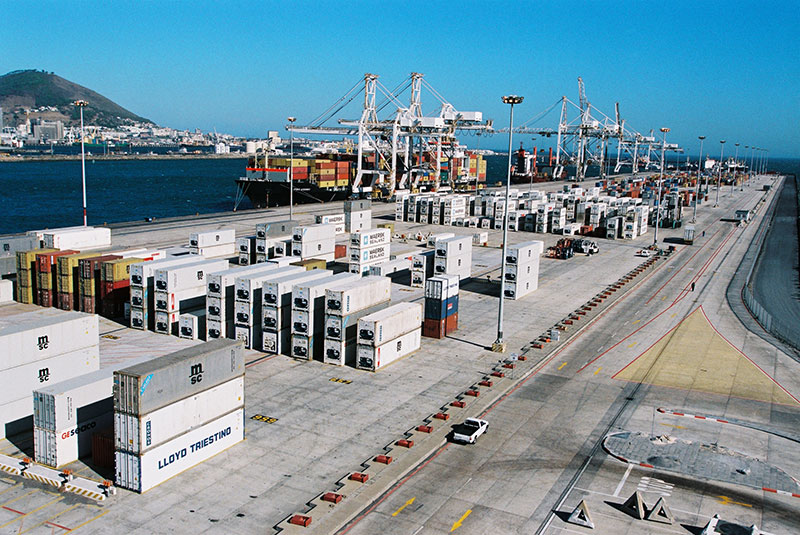

As of March 2026, South Africa’s maritime landscape has shifted. Following the effective closure of the Strait of Hormuz, the ports of Durban and Cape Town have taken on a dual identity: they are no longer just export hubs, but strategic “Service Stations” for a global fleet bypassing conflict zones via the Cape route.
The 112% Diversion Surge
A 112% surge in transit vessels now utilizes South African ports for refueling and resupply. This influx creates direct competition for resources. Transit ships—requiring urgent bunkering and pilotage—utilize the same infrastructure required by the agricultural sector, turning our harbors into high-traffic waypoints.
The Biological Clock: Throughput vs Perishability
In agricultural logistics, throughput is a race against a biological clock. As vessels wait for berths in crowded anchorages, the “cold chain” for perishables faces a crisis.
While table grapes and the forecasted 22 million cartons of avocados are the most immediate concerns, ports are also struggling with the peak of the apple and pear season and the final weeks of stone fruit. These are living organisms; every hour spent staged in a terminal or anchored offshore shifts internal sugars and firmness. With early citrus now arriving, terminal refrigerated “plug-in” capacity has reached a critical ceiling. What begins as a logistical delay ends as a biological crisis: fruit destined for premium shelves risks being downgraded to juice grade before leaving South African waters.
Port Performance Data: March 2026
The logistical strain is reflected in the current performance metrics across three primary regions:
Durban (Global Transit Hub): Meeting efficiency targets at 28 Gross Crane Moves per Hour (GCH), but bunkering demand is at an all-time high. Transit ships are consuming tug and pilot priority, extending queues for cargo vessels.
Cape Town (Primary Export Gate): Performance has dipped to 18–20 GCH. Currently, 1,688 reefer containers are staged at the terminal, with vessels facing a 10-day average wait to berth.
Eastern Cape (Logistical Safety Valve): Ngqura and Gqeberha maintain a stable 22–24 GCH with a significantly shorter 2–4 day wait. This has triggered a 115% spike in “bypass” trucking as farmers move goods overland to find an open door to the market.
The Operational Balance
Because transit vessels require shorter stays than cargo-intensive export ships, they often receive priority, leaving the agricultural sector to navigate a “parking lot” of ships. Exporters are adapting via the Eastern Cape “safety valve,” despite higher trucking costs and rising diesel prices triggered by the global conflict.
As the main citrus season approaches, the challenge is balance: supporting the world’s diverted shipping lanes while ensuring domestic agricultural wealth reaches its destination intact. The port is no longer just a gateway; it is a high-stakes waiting room.