


Statistics South Africa (Stats SA) has confirmed that the agricultural sector was a primary engine of the South African economy in 2025. According to the Gross Domestic Product (GDP) data released today, the industry recorded a massive 17.4% annual growth rate, rebounding from a lackluster 2024.
This recovery provided a significant lift to the national economy, which grew by 1.1% overall—the fastest pace in three years. However, expert analysis and sub-sector data reveal that this success remains “uneven,” split between record-breaking crop yields and a struggling livestock industry.
The “Green” Engine: Field Crops and Horticulture
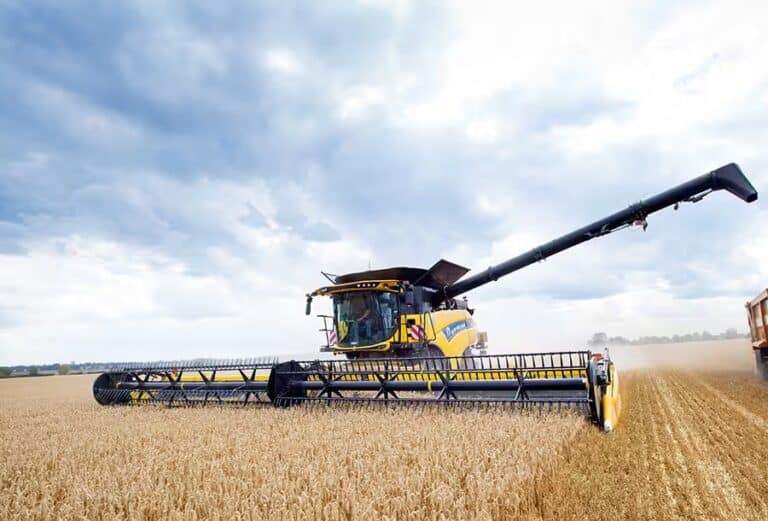
The 17.4% surge was driven predominantly by the “green” side of the sector. Favourable La Niña rainfall through the 2024/25 season led to a near-record summer grain harvest and exceptional fruit production. In the fourth quarter (Q4) of 2025 alone, the industry grew by 0.4%, marking its fifth consecutive quarter of gains.
Agbiz Chief Economist Wandile Sihlobo, reacting to the data, noted that while the double-digit growth is a victory, it is partly a “base effect” following the 2024 contraction. “The recovery is robust but concentrated,” Sihlobo remarked. “Field crops and horticulture are powering the numbers, but they are masking deep financial pressures elsewhere.”
The “Red” Warning: Livestock and Imports
While the national headline is positive, the “red” side of agriculture—livestock—tells a different story. Despite the overall sector growth, Stats SA reported a notable increase in the imports of live animals and animal products in Q4 2025.
This reflects the ongoing biosecurity crisis. Foot-and-mouth disease (FMD) and African Swine Fever have continued to limit local production and export potential. Sihlobo warns that for growth to be sustainable in 2026, the focus must shift from weather to health. “Biosecurity is now an economic mandate. Vaccinating the national herd is the only way to ensure the livestock sector doesn’t pull down the 2026 figures,” he stated.
Logistics and the “Export Tax”
A critical red flag in the Q4 data was a 0.6% decline in overall exports, specifically in vegetable products and beverages. This decline occurred despite high production levels, pointing directly to the “logistics tax” paid by farmers at the ports.
For Western Cape producers of table grapes and wine, port inefficiencies between November and February proved immensely costly. While the recent installation of 120 new reefer plug points at the Port of Cape Town is a step toward fixing this, the Q4 data proves that production growth is only half the battle; the ability to move products to market remains a significant hurdle.
Looking Ahead: 2026 Outlook
As we conclude the 2025 calendar year, the industry faces a turning point.
The Weather: The La Niña cycle is ending, with a transition to neutral weather in April and a potential El Niño shift by late 2026.
The Target: With a record US$15.1 billion in exports achieved in 2025, the challenge for 2026 will be maintaining these levels amid changing weather and rising input costs—particularly fuel and fertilizer—driven by global geopolitical tensions.