

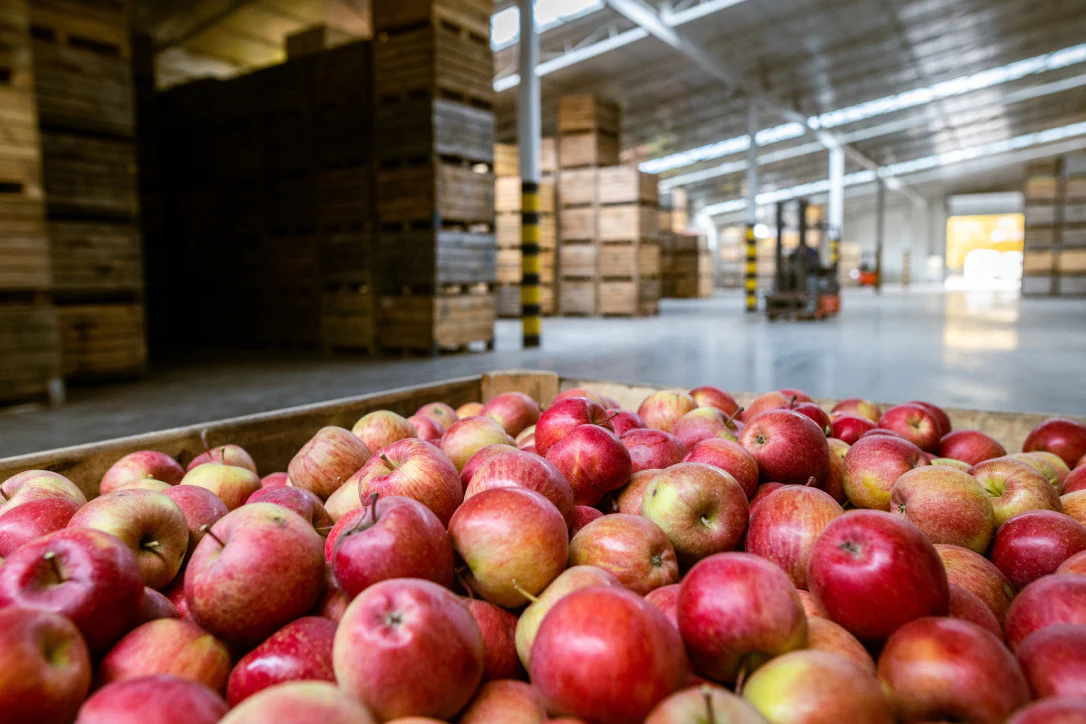

The global fresh fruit trade is fighting a losing battle against its own supply chain. This high-value industry, particularly for goods like grapes and berries, faces a severe crisis where the contest for market share is no longer won on the farm, but increasingly lost on the water. The specific logistical nightmares crippling South African fruit exporters are not isolated events; they are a stark symptom of a worldwide system vulnerable to climate volatility and structural fragility.
The Bottleneck: Reliability, Not Distance
For importers, the biggest bottleneck is not the distance but the unpredictability of the supply chain. A shipping line’s inability to maintain a schedule destroys the narrow market window for perishable goods.
Example: The Wind vs. The World: In Cape Town, multimillion-dollar investments in new cranes, designed to operate in winds up to 90 km/h, were rendered useless when a storm brought wind speeds of 120 km/h. This forced a total halt, leaving hundreds of refrigerated containers—high-value stock destined for the crucial pre-Christmas market—stuck in cold storage.
The consequence for the importer is severe: the scheduled 24-day journey can stretch into eight weeks, pushing the fruit past its viable shelf life, resulting in massive write-downs and increased claims. For the farmer, this means absorbing high diversion and storage costs, threatening the sustainability of the entire upstream sector.
The Global Impact of Supply Chain Fragility
This vulnerability is global. While South Africa grapples with wind, other markets face equally crippling disruptions. Key receiving ports like Rotterdam and other European hubs experience persistent delays and labour issues, meaning the fruit that successfully navigated the ocean is now spoiling on the quay. Furthermore, geopolitical and climate stress—from the Panama Canal drought to high insurance premiums in conflict zones—reinforce a permanent condition of high logistical expense and low operational reliability.
The importer is forced to use expensive, advanced technologies like Maxtend or Controlled Atmosphere (CA) containers to preserve quality. As one importer noted, this is the “best way of shipping for organic grapes, but it is also a lot more expensive,” further squeezing already thin margins.
Competitor’s Edge: Engineering Reliability
The difference between failing and succeeding in this environment is engineered reliability. While South Africa holds a theoretical geographical advantage to some markets, its competitors neutralise this with superior logistics. For example, while a South African vessel might take up to eight weeks due to domestic delays, Chile guarantees a 23-day transit time to China through its “Cherry Express”—a dedicated, non-stop shipping service.
Chile and Peru achieve this by prioritising speed and using advanced post-harvest technology. They engineer the fruit to survive up to 40 days of transit using CA technology, providing a necessary survival buffer against any unforeseen delays. Importers will always prioritise the supplier that can guarantee delivery for a major retail window, even if the competitor’s initial freight costs are higher.
The Path to Resilience
To tackle this ongoing crisis, a shift from passive reaction to active resilience is required across the supply chain:
-
For Ports: Investment must focus on climate-resilient infrastructure designed to exceed current extreme weather events and establishing a fast, publicised Recovery Plan for clearing backlogs immediately after disruption.
-
For Importers/Exporters: Adopt a multi-port and multi-origin sourcing strategy to diversify risk. Critically, there must be greater investment in digital visibility and advanced post-harvest cooling and packaging technologies (CA/MA liners) to extend the fruit’s shelf life, providing a survival buffer against inevitable delays.
-
For Governments: Prioritise national logistics infrastructure and pursue trade agreements that offset high logistical costs with lower tariffs, making the final product competitive even with the necessary expense of reliable cold chain management.
The logistical nightmare for fresh fruit importers is a structural feature of modern global trade, not a seasonal anomaly. The current system punishes quality with unreliability, forcing premium produce to be treated as a high-risk commodity. Future success will depend entirely on the industry’s ability to invest aggressively in both climate-resilient port infrastructure and cold-chain technology, ensuring that the excellence achieved on the farm is not spoiled on the dock.