

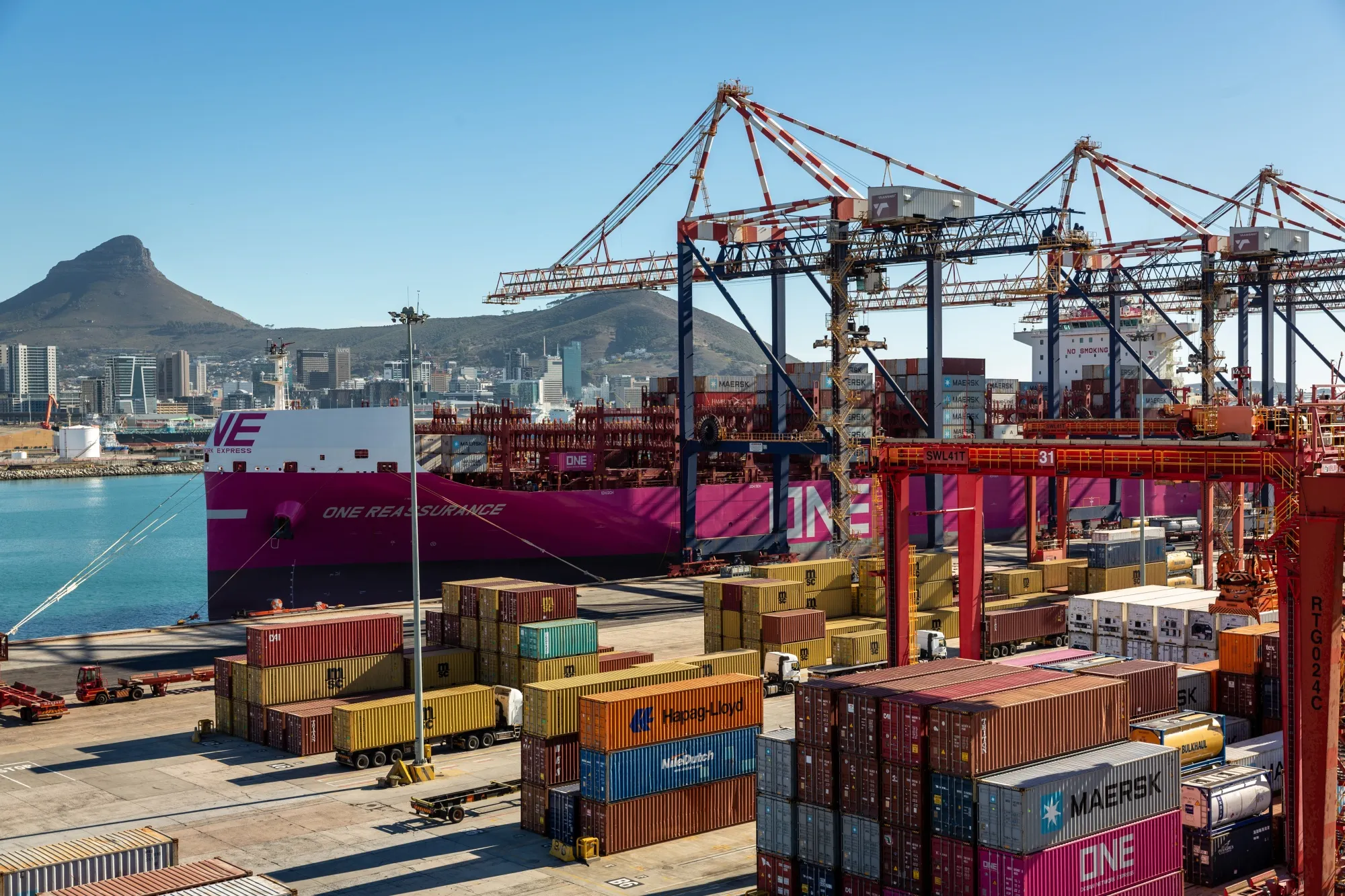

The Western Cape Government has reaffirmed its commitment to building a globally competitive logistics ecosystem—one it says is central to the success of the province’s agricultural sector. Speaking at a recent meeting of the South African Association of Freight Forwarders (Saaff), Agriculture, Economic Development and Tourism MEC Ivan Meyer positioned logistics as the backbone of trade, emphasising that efficient movement of goods remains non-negotiable for an export-driven farming economy.
A major development is the progress made on a new digital logistics planning platform for container freight passing through the Port of Cape Town. For producers shipping stone fruit, table grapes, citrus, wine and other high-value perishables, this platform is expected to reduce bottlenecks that have historically added cost and uncertainty—especially during peak harvest.
Zero tolerance for delays across the value chain
Meyer stressed that the province has adopted a “zero-tolerance approach” to delays at any point in the logistics chain. He noted that a single slowdown, whether at a container terminal or at a cargo transfer point, can escalate costs for farmers and exporters already battling thin margins. He appealed to logistics agencies, including Saaff members in the Western Cape, to maintain close collaboration with government as work continues to stabilise the system.
He commended Saaff for its leadership in freight forwarding and for supporting the national logistics policy, which aligns with the Western Cape’s efforts to restore reliability in its export corridors.
Port capacity upgrades to support peak-season throughput
Port efficiency remains a critical factor for agriculture, particularly as the Western Cape heads into stone fruit and grape export season. Meyer confirmed that nine new rubber-tyred gantries (RTGs) will be operational at the Cape Town Container Terminal next month, with a further ten arriving by February. These additions are expected to improve turnaround times and reduce vessel delays that have previously led to fruit spoilage risks and increased cold-storage costs.
Job creation reflects sector resilience
The latest Quarterly Labour Force Survey (Q3 2025) shows the Western Cape added 65 000 jobs year-on-year and 70 000 quarter-on-quarter, bringing its unemployment rate down to 19.7%, significantly lower than the national rate of 31.9%. Transport and Trade—industries closely tied to agricultural logistics—contributed 37 000 and 34 000 new jobs respectively. For rural economies dependent on seasonal employment and agri-processing, this momentum is especially important.
Growth for Jobs Strategy fuels long-term outlook
The province’s Growth for Jobs Strategy aims to build a R1 trillion economy by 2035, supported by consistent annual growth of 4–6%. Recent achievements include R50 billion in investment commitments at the Western Cape Investment Summit and new market access to China for stone fruit—an opportunity expected to boost export volumes and improve shipping connectivity.
Meyer summed up the vision succinctly: “The future belongs to those who build bridges, not barriers. In logistics, every efficient link is a bridge to prosperity.”
Mobility MEC emphasises economic backbone
Western Cape MEC of Mobility, Isaac Sileku, underscored that a reliable logistics network is essential not only for industry but for the livelihoods connected to agricultural production. “When goods and services move efficiently, businesses grow, jobs are created, and communities prosper,” he said.