

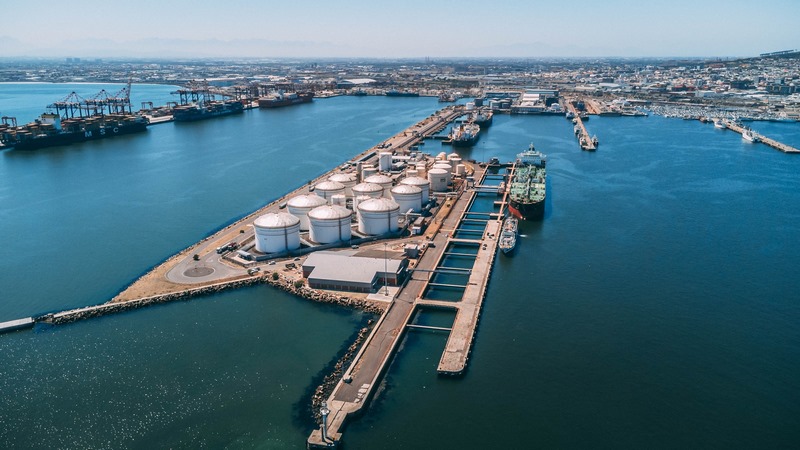

A significant shift in the Western Cape’s industrial landscape was finalized this week as Transnet National Ports Authority (TNPA) officially appointed FFS Tank Terminals to refurbish and operate a critical liquid bulk terminal at the Port of Cape Town. Under a 25-year concession, this R102 million investment marks a strategic fortification of the food and agricultural input supply chain, addressing long-standing logistical hurdles in the region.
For the South African agricultural sector, this is not merely a “harbor project.” It is a vital upgrade to the “plumbing” of the industry, ensuring that both the ingredients for food production and the chemicals required for crop processing move more efficiently from the quayside to the farm gate.
Stabilizing Food-Related Logistics
The cornerstone of this appointment is the 25-year tenure granted to FFS Tank Terminals. In an era where logistical bottlenecks at South African ports have often acted as a “hidden tax” on farmers, this long-term agreement provides much-needed operational certainty.
The terminal specializes in edible oils and compatible cargo. By upgrading existing storage tanks and gantry systems, the project aims to significantly enhance the throughput of vegetable oils. For agri-processors and the food service industry, this means a more reliable flow of ingredients. Stability in port logistics directly reduces the “risk premium” often added to food prices, helping to curb food inflation and ensuring that the journey from import to supermarket shelf remains efficient.
Beyond Food: The “Chemical Engine” of Agriculture
Perhaps the most significant development for primary producers is the terminal’s expansion into specialty chemicals. The press release confirms that the upgraded infrastructure will now handle Caustic Soda Lye and Monoethylene Glycol (MEG).
To the layperson, these are industrial liquids; to the farmer and processor, they are essential tools:
- Caustic Soda Lye: This is the “gold standard” for hygiene in the dairy and livestock sectors, used for Cleaning-in-Place (CIP) to maintain sterile environments. It is also vital in the Western Cape’s fruit canning and drying industries for chemical peeling processes.
- Monoethylene Glycol (MEG): This is the lifeblood of the agricultural cold chain. As a primary cooling agent, MEG is essential for the refrigeration plants in packhouses that keep South Africa’s world-class fruit exports fresh for international markets.
By creating a dedicated, modernized channel for these chemicals, the Port of Cape Town is helping to stabilize the input costs that have squeezed farm margins over the last 24 months.
A Modernized Gateway for Agri-Exports
The project is a “brownfield” development, meaning it optimizes 6,289 m2 existing port land rather than requiring new, environmentally sensitive clearances. This efficiency allows for a faster turnaround in infrastructure readiness.
For the agricultural sector, a modernized liquid bulk precinct means fewer delays for the vessels carrying the ingredients and chemicals that keep our farms running. As TNPA shifts toward diversification, the Port of Cape Town is evolving from a traditional fruit-export hub into a sophisticated multi-purpose gateway that supports the entire agricultural ecosystem.
As this 25-year partnership begins, the message to the agricultural community is clear: the “plumbing” of our food system is getting a much-needed upgrade, ensuring that South African agriculture remains competitive on the global stage.