

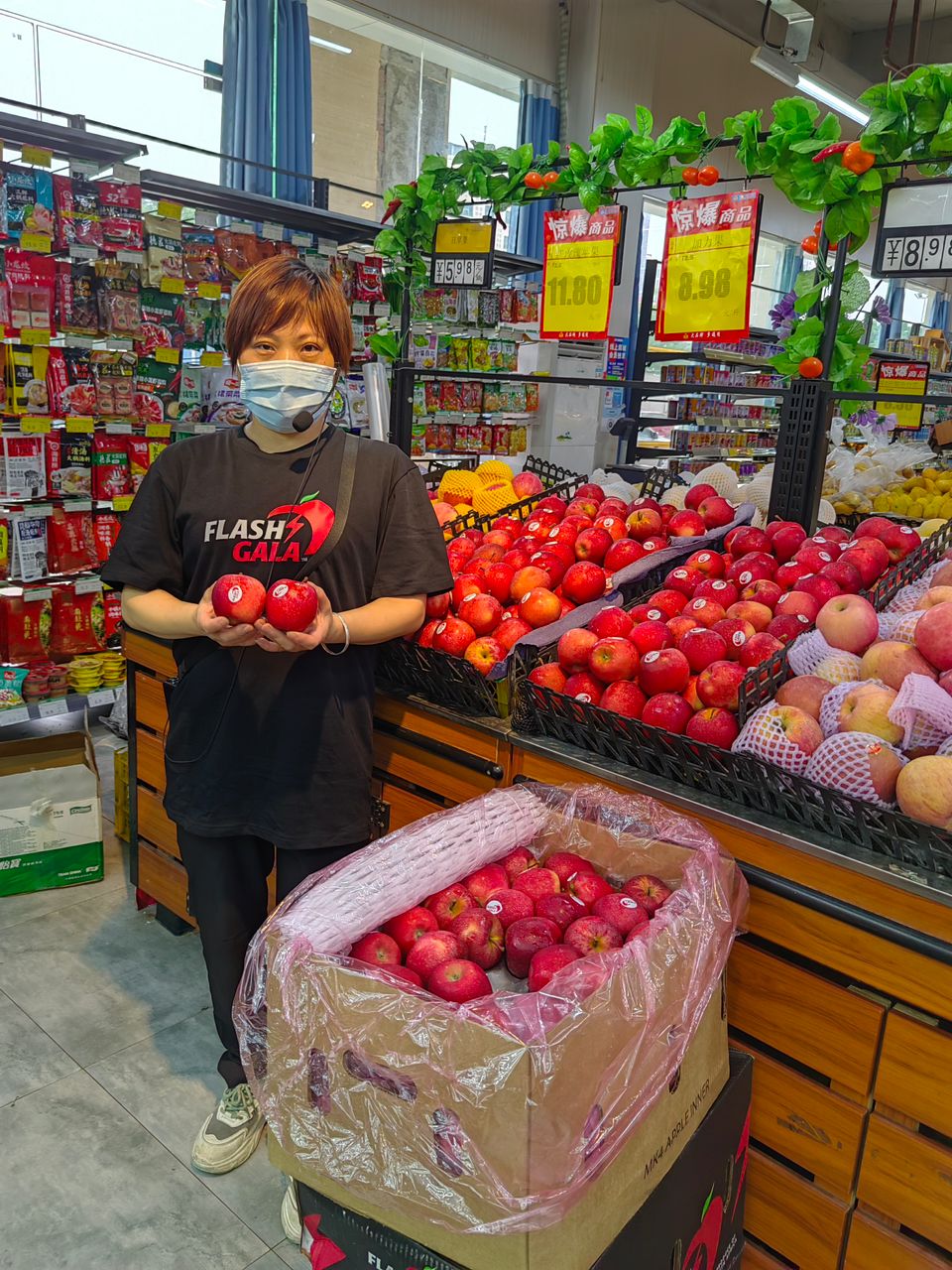

The removal of Chinese import tariffs on South African fruit is already delivering strong results for Tru-Cape Fruit Marketing, with the company’s apple exports to China increasing by almost 50% year to date. The development has created vital new opportunities to expand South African apples’ presence in one of the world’s largest consumer markets, while simultaneously highlighting the urgent need for more competitive market access in India.
Until 1 May 2026, South African fruit entering China was subject to a 10% import tariff. The reduction to 0% has levelled the playing field for Southern Hemisphere suppliers, giving South African exporters a far more competitive edge.
“The playing field is now definitely level, with all Southern Hemisphere countries enjoying a zero tariff,” says Conrad Fick, marketing director at Tru-Cape, which accounts for more than 20% of South African apple exports to China.
“The tariff reduction presents a good opportunity to expand our market share in Chinese retail,” Fick adds. “South African Royal Gala Red and Royal Beaut apples are performing particularly well, and we are also seeing growing acceptance of the Flash Gala brand, which is helping to increase both volumes and prices.”
Quality and Market Positioning in China
While zero tariffs improve competitiveness, China remains a premium market where quality is non-negotiable. South African fruit is gaining solid traction in both retail and snacking segments. Although New Zealand holds an advantage in proximity and gift-apple market share, South Africa possesses distinct competitive strengths.
“Chinese consumers appreciate the flavour profile of South African apples. We can also produce apples more cost-effectively than New Zealand, while our shipping times are shorter than those of Chilean exporters,” Fick notes. However, he cautions that increased South African volume entering China has applied pressure to prices, underscoring the need to balance volume growth with demand and quality.
India’s Tariff Gap Poses a 2027 Challenge
Roelf Pienaar, Tru-Cape’s managing director, described China’s tariff removal as a landmark step, but warned that similar initiatives are urgently needed in India, where South African apples still face a 50% import duty.
“Our biggest challenge for 2027 will be the changes to import duties in India,” Pienaar says. “From January 2027, import duties on apples from New Zealand are set to decrease from 50% to 25%, while chances are good that duties for the European Union will fall from 50% to 20%. There is still no certainty about when South Africa’s duty, which remains at 50%, will be reduced.”
Why This Is Important for Producers
For South African apple growers, market access directly dictates farm-gate profitability and long-term economic viability.
Enhanced Net Returns from China: The shift from a 10% tariff to 0% in China immediately improves the net margin returned to packing sheds and growers. It allows high-performing varieties like Royal Gala Red, Royal Beaut, and Flash Gala to compete on price without sacrificing producer margins.
Diversification and Risk Mitigation: Expanding market share in China provides producers with a reliable high-volume destination, reducing over-reliance on traditional European markets during peak harvest windows.
The Threat of Margin Erosion in India: Without a negotiated tariff reduction in India, South African producers risk being priced out by New Zealand and EU competitors starting in 2027. A 25% to 30% tariff disadvantage will make it difficult for local growers to secure sustainable returns in the Indian market.
Securing equitable trade agreements remains vital to protecting existing export gains and unlocking future growth for the entire South African apple industry.