

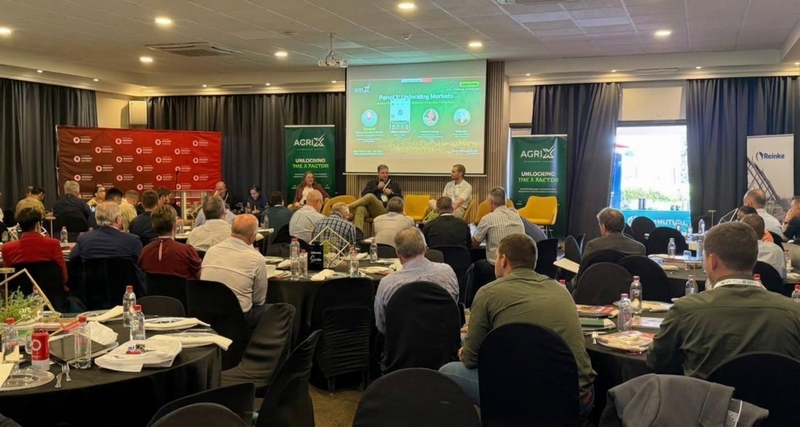

Biosecurity is no longer just an animal health issue—it is the ultimate system test for South Africa’s agricultural economy. At the Agri X Fusion Red Meat Value Chain Collaboration Summit held on October 20–21, 2026, at Silver Lakes Golf Club in Pretoria, industry leaders, government officials, and researchers reached a consensus: South Africa’s biosecurity framework is broken, and fixing it requires immediate, coordinated execution.
The Scale of the Crisis and Trade Realities
Opening Day 2, Agbiz Chief Economist Wandile Sihlobo reminded delegates that while South Africa is a top-30 global agricultural exporter, its red meat sector is severely underperforming its potential. Agriculture remains the country’s third-largest export earner, but biosecurity breaches threaten its foundation.
Dr. David Gerber of Dunevax Biotech revealed that Foot-and-Mouth Disease (FMD) puts over R97 billion in livestock production value at risk. Beef export volumes plummeted 26% between 2024 and 2025, with projected five-year losses exceeding R13 billion across beef and dairy. Gerhard van der Burgh (BFAP) added that direct FMD export losses have passed R1.29 billion, while provincial veterinary services face a R1.4 billion funding deficit. As Dr. Gerber noted, “No virus has ever asked a minister for advice. The virus doesn’t follow provincial boundaries.”
Bridging Research and Commercial Investment
Beyond biosecurity, the summit focused heavily on bridging the gap between academic research and farm-level execution. Opening Panel 4, Prof. Eugene Cloete (CHEC) noted that vital research often remains “on the shelf” due to mismatched university and commercial timelines. Demonstrating strong industry appetite, Red Meat Industry Services (RMIS) received 108 research proposals under its Field to Future project. Delegates urged academia and agribusiness to co-define research goals up front, simplify IP licensing—such as the ARC making its FMD vaccine IP available to private labs—and leverage tools like the 150% R&D tax deduction.
Key Pillars and Core Takeaways
Alongside biosecurity and research, speakers highlighted four additional drivers of value-chain competitiveness: bankable sustainability models, inclusive commercialisation for smallholders (who hold 41% of cattle and 86% of goats), digital traceability, and a unified export strategy.
To move from dialogue to delivery, summit delegates established four non-negotiable priorities:
- One Accountable Lead (100 Days): Appoint a single national command authority with decision-making power to enforce movement controls and rapid outbreak responses.
- Traceability Delivery (1 Year): Roll out mandatory animal identification and tracking—the non-negotiable “passport” to global markets—alongside a unified export body.
- Close Funding Gaps & Build BSE Capacity: Bridge the R1.4 billion veterinary service deficit and establish compliant local screening facilities for BSE (mad cow disease) to maintain trade compliance.
- Economic Resilience via “One Health”: Frame biosecurity as national economic defense. As Dr. Riaan du Preez (MSD Animal Health) highlighted, 58% of human infectious diseases are zoonotic; early animal surveillance protects public health, livestock, and investment capital.
The Bottom Line
South Africa’s red meat sector possesses world-class genetics and strong consumer demand. However, as delegates at the Agri X Fusion Red Meat Value Chain Collaboration Summit agree, success hinges on execution. Systemic competitiveness is no longer about how long the sector can afford to invest in biosecurity and research—it is about how long it can afford not to.
Unlocking Agricultural Potential: Key Takeaways From the 2026 Datacentrix Agri Indaba