

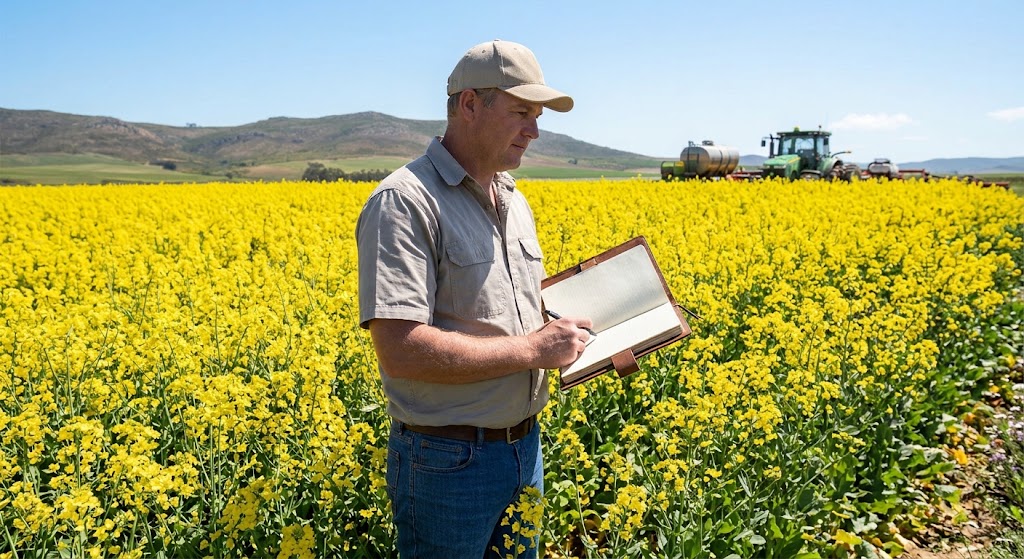

The decision by South Africa’s GMO Executive Council to approve field trial permits for Corteva Agriscience’s genetically modified (GM) canola event DP73496 has reopened one of the most contentious debates in African agriculture: How do we balance technological innovation and global competitiveness with environmental stewardship and seed sovereignty?
What is a GMO?
GMO stands for Genetically Modified Organism. It refers to plants, animals, or microorganisms whose genetic code (DNA) has been altered in a laboratory using modern scientific techniques. In farming, seeds are often modified to withstand harsh weather, resist pests, or survive weedkiller sprays (herbicides) so farmers can clear weeds without damaging their crops.
Environmental Concerns and the Threat of Chemical Dependence
The approval ignited swift pushback from civil society groups, including the African Centre for Biodiversity (ACB). Pointing to South Africa’s broader international commitments at the UN Biodiversity Conference (CBD COP17), environmental advocates condemned the permit as a policy contradiction.
Their argument centres on ecological risk: engineered specifically for glyphosate tolerance, event DP73496 (marketed commercially as Optimum® GLY), critics warn, will deepen dependence on synthetic agro-chemicals, accelerate weed resistance, and risk genetic outcrossing with South Africa’s native Brassicaceae species. To anti-biotech advocates, approving herbicide-tolerant trial plots expands corporate seed dominance at the expense of long-term soil health and agroecological diversity.
“The Real Issue is Competitiveness”
Yet from the perspective of commercial growers, the view looks vastly different. Writing in an opinion piece for Daily Maverick titled “The real GMO issue is whether farmers are allowed to compete,” Dr. Tobias Doyer, CEO of Grain SA, framed access to modern agronomic tools not as a luxury, but as a survival imperative.
Addressing the ongoing debate across South African media, Doyer argued that critics often confuse corporate market power with the agricultural tools farmers rely on to remain solvent. While market concentration should be addressed through competition law, denying local growers access to productivity-boosting technology will not solve structural poverty or food insecurity—it will simply make food more expensive to produce and leave South African producers unable to compete against heavily subsidized international competitors. In an era of increasing climate risk, Doyer contends, stripping farmers of technological options leaves them vulnerable when resilience matters most.
Bridging the Gap in South Africa’s Dual Policy Framework
This fundamental tension leaves South Africa managing a dual-track agricultural policy: promoting low-input, regenerative soil practices while simultaneously relying on commercial biotechnology to secure high crop yields. Rather than treating this debate as a zero-sum war between ideology and science, policymakers face the challenge of evaluating evidence objectively to ensure farmers have safe, effective tools to feed the nation while protecting ecological systems.
What Happens Next in the Trial Process?
Despite the fierce debate, it is important to note that granting a field trial permit is not an immediate green light for commercial farming.
Under South Africa’s GMO Act, field trials are strictly controlled research exercises:
3-Season Requirement: Before any GM seed can be evaluated for full commercial planting (general release), regulatory protocol requires the applicant to conduct field trials across at least three growing seasons. This testing phase evaluates local agronomic performance, weed control efficacy, and biosafety risks across variable climate conditions.
Practical Soil Science to Take Center Stage at SADC Plant Nutrition Symposium
Containment & Destruction: The trial crops cannot be sold, mixed into commercial food processing streams, or distributed to markets. At the conclusion of each trial season, all plant material is harvested strictly for research data and must be contained or destroyed to prevent seed dispersion into surrounding ecosystems.
While civil society groups continue to demand a reversal of the trial permit, Corteva’s trial plots will serve as the immediate testing ground—not just for agronomic data, but for the future direction of South African agricultural policy.