



According to the newly released Absa AgriTrends Spring 2026 Report, launched at NAMPO Cape in Bredasdorp where climate resilience and input cost pressures formed the centrepiece of industry discussions, while warnings of returning El Niño conditions typically spark widespread drought fears across South African farming communities, the 2026/27 summer production season enters the cycle from a unique position of strength.
However, Absa’s research cautions against premature optimism. The AgriTrends report emphasizes that the primary risk to the upcoming harvest may not be a simple lack of total rainfall, but rather the rising frequency and intensity of extreme heat events occurring at critical growth stages.
A Cushioning Buffer: 2016 vs. 2026
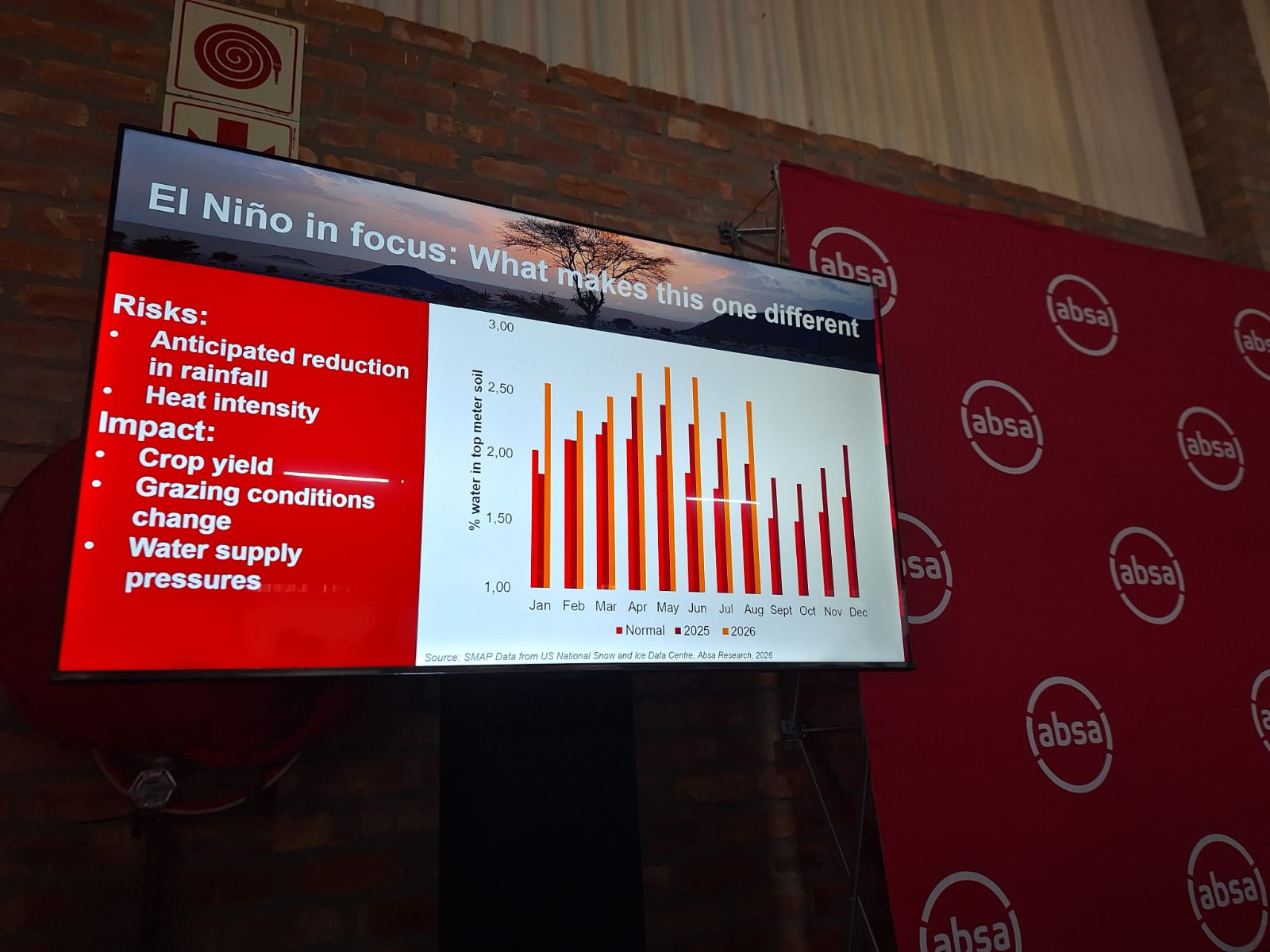
Absa’s findings in the AgriTrends Spring 2026 Report show that South Africa enters the upcoming summer planting window supported by two consecutive seasons of sustained rainfall, which replenished subsoil moisture reserves across central grain-producing regions. The report contrasts this hydrologic buffer with the conditions seen during previous severe drought periods:
- Dam Levels: Absa notes that South Africa’s national average dam level stood at 95.5% in August 2026, compared to just 55.0% in August 2016 during the last major drought cycle.
- Soil Moisture Profiles: According to the report, subsoil moisture reserves across major central crop belts are well-replenished, providing essential support for early crop establishment.
- Veld & Stock Buffers: Absa highlights that healthy dam levels, improved grain stock availability, and strong veld conditions offer producers a vital buffer against early-season climate shocks.
“The key climate story is not simply that El Niño is returning, but that South African agriculture is considerably better positioned than during previous drought cycles.”
— Loffie Brandt, Sector Head for Agriculture at Absa AgriBusiness
As Absa points out, this resilience is further enhanced by adaptive producer practices, such as no-till cultivation methods that preserve soil moisture and the uptake of higher-performing, drought-tolerant seed cultivars.
The Real Vulnerability: Extreme Heat Spikes and Rainfall Timing
Despite these solid baseline conditions, Absa AgriBusiness cautions that high dam levels and moist subsoils cannot fully insulate crops if elevated temperatures occur during key growth phases.
The Absa AgriTrends Report outlines how extreme heat and poor rainfall distribution impact different agricultural sub-sectors:
- Grain Production: Absa warns that even in fields with good subsoil moisture, high temperatures during maize pollination can cause silk desiccation, failed fertilization, and kernel abortion.
- Horticulture & Fruit: The report identifies extreme heat as a direct risk factor for fruit sunburn, thermal stress, and overall quality downgrades.
- Vegetables & Livestock: Elevated heat increases plant transpiration and animal heat stress, accelerating water consumption and risking sudden yield or production dips.
- Rainfall Timing: Absa stresses that total seasonal rainfall is less decisive than its timing. A mid-season heat spell coinciding with dry conditions during flowering can reduce yield potential regardless of earlier moisture.
- Vulnerable Soils: Dryland producers working lighter soils with lower water-holding capacity face heightened risk during prolonged dry spells, which tend to be more frequent during El Niño years.
Strategic Guidance for Producers
Looking ahead to the summer planting window from October to December, Absa’s analysis highlights several critical management actions for farmers to maintain resilience:
Stellenbosch University Ag-Tech Spinouts Drive Smart Farming
- Track Moisture & Forecasts closely: Focus on short-term spatial rainfall forecasts and actual soil moisture profiles before planting rather than relying on seasonal rainfall totals alone.
- Optimize Input Efficiency: Prioritize input investments on high-potential land with superior water-holding capacity.
- Manage Flowering Windows: Stagger planting dates where feasible to prevent all crops from reaching temperature-sensitive flowering stages during mid-summer heat spikes.
- Build Financial Reserves: Strengthen working capital and maintain disciplined liquidity management to absorb potential localized yield pressures.
According to the Absa AgriTrends Spring 2026 Report, while El Niño presents real production risks, the sector’s current reserves give producers a far better foundation to manage these challenges than in past cycles. Ultimate performance will depend on rainfall distribution, soil moisture retention, and mitigating the heat at critical crop development stages.