

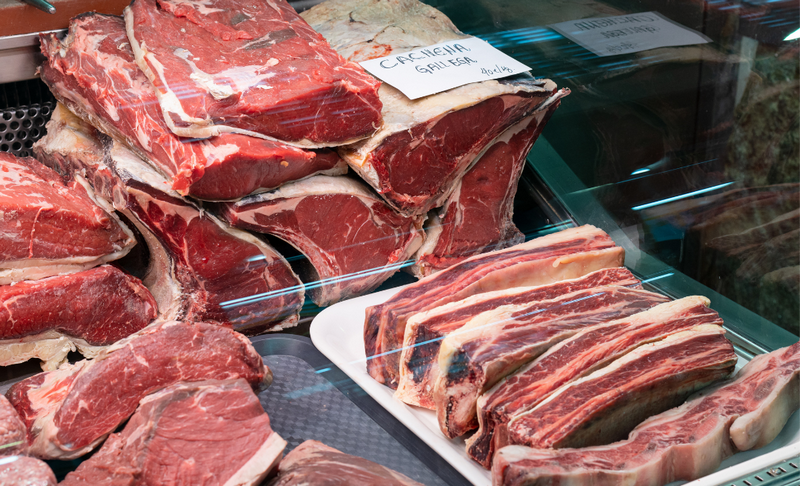

The recent SA-Italy Agriculture Business Forum in Cape Town highlighted a strong Italian appetite for local beef, signalling potential growth for South Africa’s livestock sector. However, industry representatives warn that chasing new European horizons is meaningless if the government continues to neglect existing, highly lucrative trade channels that are already open but currently blocked by red tape.
According to the Association of Meat Importers and Exporters of Southern Africa (AMIE), the primary challenge facing local red meat producers is not a shortage of global buyers. Instead, the association points to a persistent failure by internal state mechanisms to finalize and maintain access to international markets that are already commercially ready.
The Cost of Blocked Channels
AMIE leaders argue that the consequences of these systemic delays are best illustrated by South Africa’s ongoing trade stalemate with Qatar. Following a temporary ban on South African lamb imports, the market has remained shut despite eager foreign buyers and completed documentation.
Before the closure, local producers exported approximately 300 tonnes of lamb to Qatar every month, representing roughly 150,000 carcasses. AMIE estimates that this ongoing stagnation carries an annual loss of R750 million, translating to a staggering R1.5 billion blow over the past two years. The association notes that similar administrative blockages are currently crippling active supply chains into Egypt, Dubai, Mauritius, and Bahrain.
Industry experts emphasize that the financial fallout is compounded by long-term reputational damage. International meat importers build their procurement around consistency. AMIE warns that when South African agricultural authorities take years to finalize standard health and safety certificates, foreign buyers pivot to more agile global competitors, leaving local producers to face a costly, uphill battle to win back lost market share.
The Certification Stalemate
AMIE leadership asserts that these export roadblocks are largely self-inflicted and preventable. The association highlights multiple instances where foreign trading partners have already submitted necessary documentation or accepted South Africa’s biological conditions, meaning the breakdown occurs entirely within the Department of Agriculture where paperwork awaits final sign-offs.
Furthermore, AMIE Chairman Mark Luff reports that the domestic trade landscape is heavily fragmented by inconsistent veterinary interpretations across different provinces. According to Luff, exporters frequently report that shipments backed by valid national permits are delayed or rejected at provincial borders or ports because local officials interpret national health documents differently. Industry representatives state that this internal disconnect exposes abattoirs, cold-chain operators, and logistics providers to severe product spoilage risks.
Prioritizing Commercial Speed
To position South Africa as a reliable global agricultural hub, AMIE argues that the regulatory framework must learn to operate at commercial rather than bureaucratic speed.
The association is calling on the Department of Agriculture to urgently pivot its focus inward. Before attempting to clear the complex regulatory hurdles required to sell beef to Rome, AMIE maintains that the government must first modernize its communication channels, uniform its provincial veterinary standards, and reissue the health certificates needed to unlock Doha and Dubai.