

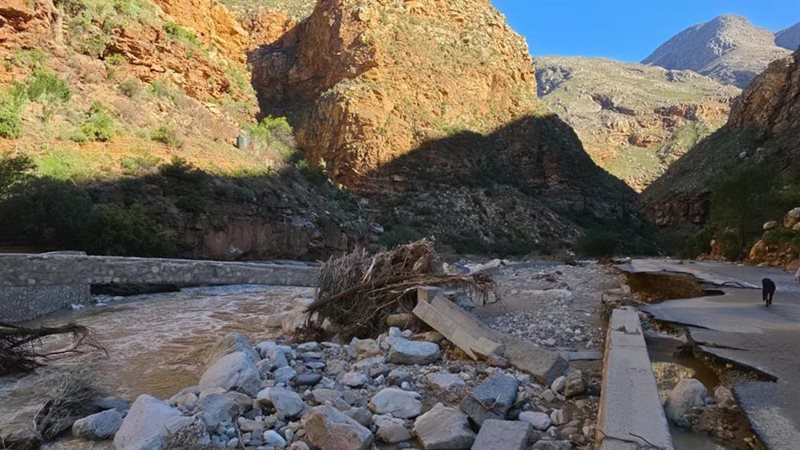

A Special Western Cape Government Cabinet meeting, chaired by Premier Alan Winde on Thursday, 11 June 2026, has revealed the catastrophic financial toll of the severe weather systems that battered the province in May 2026. Preliminary and unverified assessments place the overall damage at a staggering R9 099 211 941, with the agricultural sector suffering the heaviest losses.
The province was hit by major, consecutive weather events in a short space of time. The storms caused a tragic loss of life, severely damaged infrastructure, and left communities across the region deeply disrupted. Reflecting on the scale of the destruction, Premier Winde noted that while the province has endured many disasters, these last two weather events were the worst in recent memory.
Agriculture and Transport Sectors Hardest Hit
For the agricultural community, the figures are particularly devastating. The province’s agriculture sector sustained damages of more than R5.2 billion, accounting for over half of the total provincial damage bill. Farmers and agribusinesses are facing a massive recovery hill, which Cabinet noted will have a significant impact on both the provincial and broader economy.
Beyond the fields, the infrastructure supporting the supply chain has been severely compromised. Damage to transport infrastructure currently stands at just under R2 billion, with over 230 roads affected across the province. Many of these roads and other critical structures sustained significant damage that will require extensive repairs and long-term reconstruction.
Widespread Impact on Communities
The human and social toll of the disaster is vast. Statistics noted by the Cabinet reveal that:
- 231 029 people were affected in one way or another.
- 22 890 houses were damaged.
- 11 fatalities have been reported, with one person still missing.
Utility infrastructure was also hard hit. While Eskom’s electricity restoration efforts are making steady progress—with 95% of affected areas now successfully reconnected—many residents in the hardest-hit regions remain without power. Cabinet has formally apologized to the affected communities for the significant inconvenience caused by the severe weather.
The Battle for Funding and Building Back Stronger
The Western Cape Government has admitted that the scale of the damage far exceeds provincial departments’ existing budgets and delivery capacity. Consequently, the province is looking to national government for financial assistance, though Premier Winde warned that incredibly difficult decisions lie ahead.
“National government will not be able to provide us with all the necessary funding,” Premier Winde stated. “The Western Cape Government’s budget will have to be reprioritised to fund damage repairs.”
The Premier emphasized that the province must “build back stronger” to handle future climate-related disasters, a strategy that will inherently cost more. He stressed the need to convince national government and other entities to budget differently to adequately handle such impacts.
To secure emergency funding, the Western Cape Department of Local Government is currently coordinating a consolidated submission to the Department of Cooperative Governance and Traditional Affairs and the National Disaster Management Centre. Additionally, the provincial Minister of Local Government is corresponding with his national counterpart, impacted provincial departments are engaging their national counterparts, and Premier Winde will be corresponding directly with the President.